Choosing between mulch and decorative rock is one of the most common decisions homeowners face when designing or refreshing their landscape beds. Both options offer unique benefits and aesthetic appeal, but the right choice depends on your specific needs, maintenance preferences, and long-term landscaping goals.
After installing thousands of yards of both mulch and decorative rock across Johnson County over the past nine years, we've learned what works well in our Kansas climate and what factors matter most to homeowners. This guide will help you make an informed decision.
Understanding Your Options
Mulch Options
Our mulch options include standard mulch, hardwood mulch, cedar mulch, and bark mulch.
- Standard Mulch - Most cost-effective option
- Hardwood Mulch - Our most common affordable option, and higher quality than standard
- Cedar Mulch - Fully organic, free of dyes, and a unique color
- Bark Mulch - Our most unique option
Decorative Rock Options
Organic rock options provide a permanent solution that doesn't need replacement. Popular choices include:
- River Rock - Smooth, rounded stones in various sizes (1-3 inches common)
- Pea Gravel - Small, smooth stones typically 1/4 to 1/2 inch
- And many more options
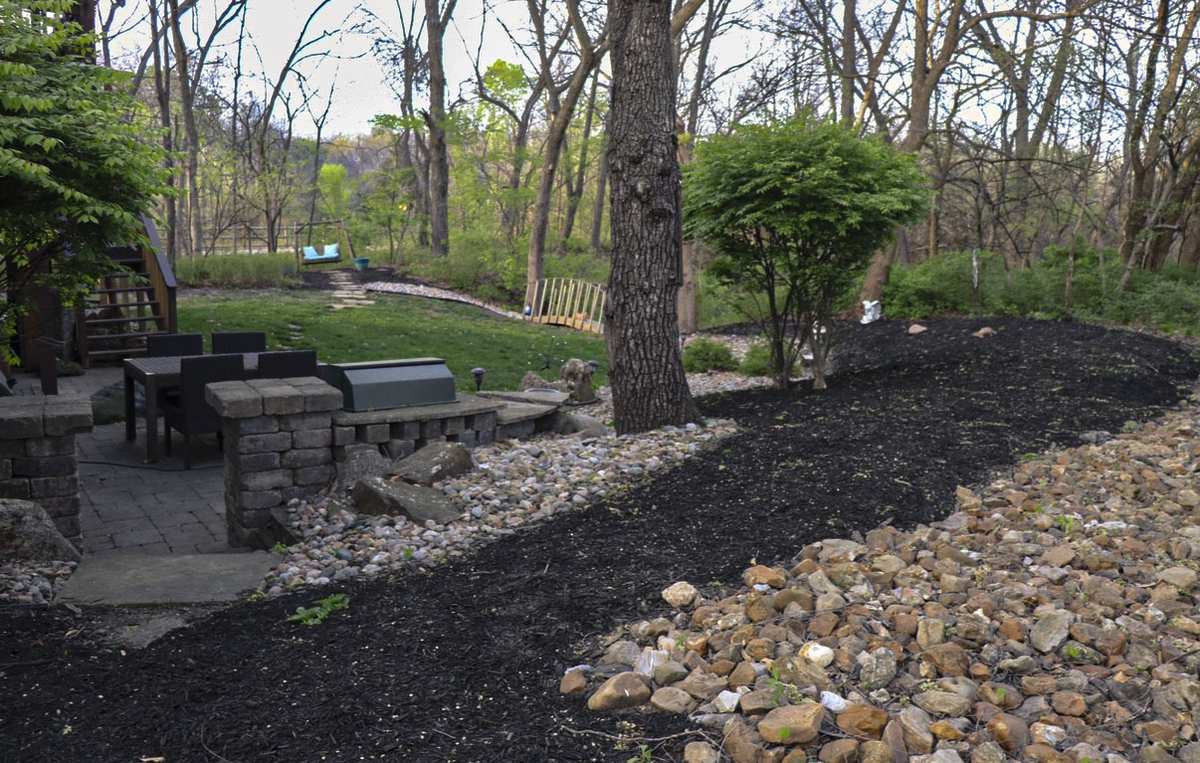
Fresh hardwood mulch creates rich color and texture in landscape beds
Side-by-Side Comparison
| Feature | Mulch | Decorative Rock |
|---|---|---|
| Initial Cost | Budget-friendly upfront investment ($100–125 per yard installed) | Premium, long-term investment ($350–450 per ton installed) |
| Longevity | Lasts 1–2 seasons before refreshing is recommended | Permanent solution that can last for decades |
| Maintenance | Simple annual refresh keeps beds looking clean and vibrant while helping suppress weeds | Very low maintenance, but weeds can still emerge and may require occasional treatment or removal |
| Soil Benefits | Improves soil health by retaining moisture, regulating temperature, and adding organic matter | Does not improve soil, but provides a clean, structured landscape look |
| Appearance & Style | Natural, classic look that enhances plants and seasonal color | Clean, modern appearance with a more structured, high-end feel |
| Heat Retention / Plant Impact | Keeps soil cooler and helps protect plant roots during hot weather | Retains heat, which can stress some plants in direct sun |
| Cost Over Time | Lower long-term cost with flexible, pay-as-you-go seasonal refreshes | Higher upfront cost, but minimal long-term replacement expenses |
When Mulch Is the Better Choice
Choose Mulch If:
- You have garden beds with perennials, shrubs, or trees that benefit from soil enrichment
- You want to improve soil quality over time
- You prefer the natural, traditional landscape appearance
- You're working with a tighter budget initially
- Your beds are on slopes where rock might shift
- You want maximum moisture retention for your plants
Mulch excels in traditional planting beds where plants benefit from the organic matter that gets incorporated into the soil as it decomposes. In our Kansas climate with hot, dry summers, mulch's moisture retention is particularly valuable.
The decomposition process, while requiring annual refresh, actually improves your soil structure and fertility year after year. If you're nurturing a garden or establishing new plantings, this benefit is hard to overstate.
When Decorative Rock Makes More Sense
Choose Rock If:
- You want a permanent, low-maintenance solution
- You're creating a modern, contemporary landscape design
- Your beds are primarily hardscape features with minimal planting
- You have beds near the house where mulch decomposition could be problematic
- You want to create contrast with areas that have mulch
- You're in an area prone to mulch-eating insects like termites
Rock shines in areas where the "set it and forget it" approach is preferred. Foundation plantings, tree rings, and decorative bed features often work better with rock, especially if you're not frequently working in those beds or adding new plants.
From a design perspective, rock provides a clean, crisp look that many modern landscapes favor. It's particularly effective around contemporary architecture or in xeriscaping applications.
The Hidden Cost Over Time (Midpoint Pricing + Delivery + Maintenance Included)
Mulch offers a lower upfront cost, but when annual material refreshes and routine maintenance are factored in, long-term expenses can add up quickly. Decorative rock requires a higher initial investment, but with no material replacement and predictable maintenance, it often results in lower total ownership cost over time.
This example uses midpoint professional pricing and includes delivery and routine maintenance. Actual pricing may vary by property, access, and material selection.
Example: 10-Year Cost Comparison (Typical 4-Yard Landscape Bed)
Mulch (Midpoint Pricing Over 10 Years):
- Initial installation: (4 yards × $115) + $45 delivery = ~$505
- Annual material refresh (years 2–10): (3 yards × $115) + $45 delivery = ~$390/year
- Routine maintenance: $150/year × 10 = ~$1,500
- Estimated 10-year total: ~$5,515
Decorative Rock (Midpoint Pricing Over 10 Years):
- Initial installation: (5 tons × $400) + $135 delivery = ~$2,135
- Routine maintenance: $150/year × 10 = ~$1,500
- Estimated 10-year total: ~$3,635
Bottom line: Mulch remains the most affordable upfront option, while decorative rock often delivers lower total cost over time when replacement materials are eliminated.
Can You Mix Both?
Absolutely! Many of our most successful landscape designs incorporate both materials strategically:
- Mulch in planting beds where you have perennials, roses, or shrubs that benefit from soil enrichment
- Rock in high-traffic areas or pathways where mulch would quickly deteriorate
- Rock around foundations and in tree rings for permanence
- Mulch in visible front beds for color and traditional appeal
- Rock in side or back yards for low-maintenance solutions
This hybrid approach lets you enjoy the benefits of both materials while managing costs and maintenance time effectively.
Kansas Climate Considerations
Our Kansas weather patterns create some specific considerations:
Summer Heat: Both materials help, but mulch provides better insulation for plant roots during our 95-100°F summer days. Rock can actually heat up and radiate heat, which may stress some plants.
Winter Protection: Mulch offers superior winter insulation for perennial roots and helps moderate freeze-thaw cycles that can damage plants.
Heavy Spring Rains: Both materials help prevent soil erosion. Properly installed rock (with landscape fabric) won't wash away. Mulch may need minor redistribution after heavy rains.
Wind: Fresh, lightweight mulch can blow around in strong Kansas winds until it settles and begins decomposing. Rock stays put.
Installation Matters
Regardless of which material you choose, proper installation is critical:
For Mulch:
- Apply 2-3 inches depth for effective weed suppression
- Edge beds cleanly for crisp appearance
- Consider pre-emergent herbicide application before mulching
For Rock:
- Install commercial-grade landscape fabric underneath
- Use 2-3 inches of rock for adequate coverage
- Install metal or plastic edging to contain rock
- Consider that changing your mind later is difficult - rock is heavy and hard to remove
Professional Tip
Whatever you choose, resist the urge to save money by applying material too thinly. A 1-inch layer of either mulch or rock won't suppress weeds effectively and will look sparse. Proper depth (2-3 inches) is essential for both aesthetics and function.
Making Your Decision
There's no universally "better" choice - the right material depends on your specific situation. Consider these questions:
- How long do you plan to stay in your home? If less than 5 years, mulch's lower upfront cost may make sense. If this is your forever home, rock's one-time investment could be worth it.
- How much time do you want to spend on yard maintenance? Be honest - if you rarely have time for yard work, rock's permanence is valuable.
- What's your landscape design style? Traditional landscapes often look best with mulch; contemporary designs may call for rock.
- Are you actively gardening these beds? If you're frequently dividing perennials or adding plants, mulch is easier to work with.
- What does your budget allow? Remember to calculate long-term costs, not just initial expense.
Our Recommendation
After thousands of installations, we typically recommend:
- Mulch for most traditional planting beds, especially those with actively growing gardens
- Rock for foundation plantings, tree rings, and decorative bed accents
- A combination approach for most properties, using each material where it performs best
The best landscape designs think holistically about material choices. What works beautifully in one area of your property might not be ideal everywhere.
Ready to Transform Your Landscape Beds?
We'll help you choose the perfect material and handle professional installation from start to finish
View Our Mulch & Rock Services